Column · @eveningdesertsafaridubaiview
How to Select the Right Dune Buggy for a Desert Adventure
Understanding What Makes a Buggy Suit for the Desert
Riding a dune buggy over the sand is one of the most memorable ways to experience the desert. The combination of speed, open air, and the rolling landscape creates an adrenaline-filled activity that appeals to many visitors. However, not every buggy is built the same, and choosing the wrong one can turn an exciting outing into a frustrating or uncomfortable experience. Knowing what to look for helps you make a confident choice, whether you are a first-timer or someone who has driven off-road before.
Step 1: Assess the Terrain You Will Cover
Dubai’s desert features a mix of soft sand, hard-packed patches, and steep dunes. A buggy that works well on flat, firm ground may struggle in loose sand or on sharp inclines. The first step is to think about the kind of terrain you expect to ride on. If the plan involves mostly gentle slopes and wide open areas, a standard recreational buggy might be sufficient. For steeper dunes and softer sand, you need a vehicle with more power and better traction. Look for buggies with wider tires and a lower center of gravity, as these features help the vehicle stay stable while climbing and descending. Also consider whether the buggy has a sand-friendly suspension system. A model that absorbs shocks well keeps you comfortable when the ground beneath you changes suddenly.
Step 2: Check the Engine Power and Type
The engine is the heart of any buggy. For desert riding, a larger engine displacement generally means more torque, which is useful for powering up dunes. Engines in the 800cc to 1000cc range are common for recreational desert buggies, but some models go higher. Pay attention to whether the engine is air-cooled or liquid-cooled. Air-cooled engines are simpler and lighter, but they can overheat during prolonged hard use in the desert heat. Liquid-cooled engines manage temperature better, which can be a real advantage on long rides. Also note the fuel type. Most buggies run on petrol, but some use diesel or a petrol-oil mix. Stick with what is readily available and familiar to you. If you are renting, ask about the engine’s maintenance schedule. A well-maintained engine is far less likely to leave you stranded mid-ride.
Step 3: Evaluate the Seating and Passenger Arrangement
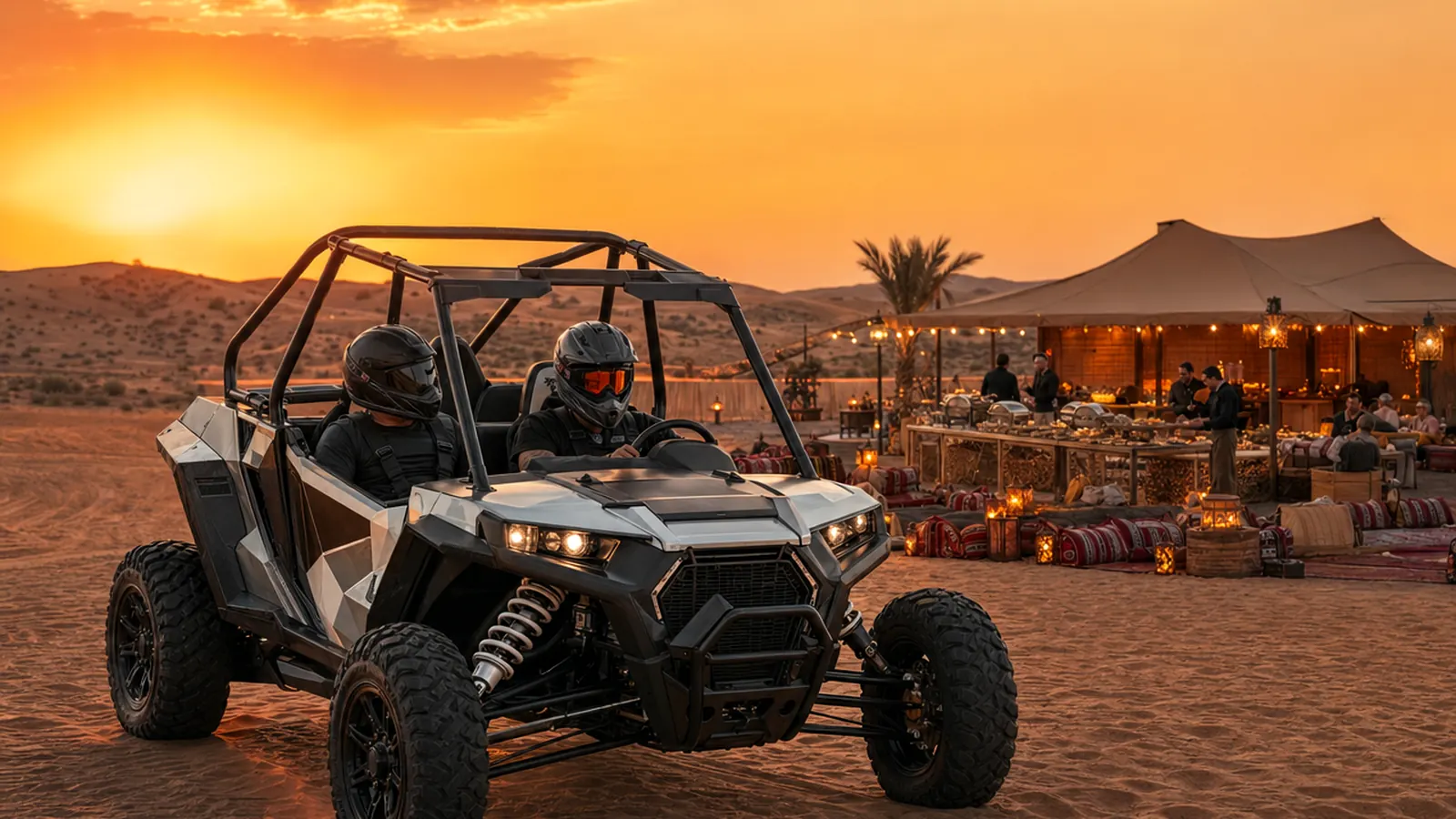
Buggies come in two-seat, four-seat, and even single-seat configurations. Think about who will be riding with you. A two-seat buggy is nimble and easier to maneuver on tight trails, but it offers less room for a passenger. A four-seat buggy provides more space and can carry a small group, but it is heavier and may feel less responsive on sharp turns. Check the seat belts and harnesses. A proper five-point harness keeps both driver and passenger secure when the buggy goes over bumps or down steep faces. Also look at the roll cage. It should be sturdy and made from welded metal tubing, with enough clearance so that tall riders do not hit their heads. Padding on the cage is a plus, as it reduces the chance of injury in rough sections.
Step 4: Look at the Steering and Controls
Desert buggies typically use either a steering wheel or handlebars. Steering wheels offer more precise control and are common on larger, car-like buggies. Handlebars can feel more intuitive for people who have ridden quad bikes or motorcycles. Test whichever control system the buggy uses before you commit. The pedals should be well-spaced and easy to reach. A gas pedal that is too stiff or too sensitive can make the ride jerky. Brakes should respond smoothly and firmly. Some buggies have a handbrake lever, which can be useful for parking on a slope. If you are renting, take a few minutes to adjust the seat position and steering column so that your arms and legs are at a comfortable angle. This simple adjustment can make a big difference over a long ride.
Step 5: Inspect the Tires and Their Condition
Tires are one of the most critical parts of a desert buggy. Standard tires may work on gravel or dirt, but they tend to sink into soft sand. Look for buggies fitted with sand tires, which have a wider footprint and deeper treads designed to float on top of the sand. Check the tire pressure. Too much pressure reduces the contact area and causes the buggy to dig in. Too little pressure can make the tires prone to damage from sharp rocks hidden under the sand. If you are renting, ask about the tire condition and whether they have been replaced recently. Worn treads reduce grip and increase the risk of getting stuck. Also examine the tire sidewalls for cracks or bulges, which indicate aging rubber that could fail during a ride.
Step 6: Consider Safety Features Beyond the Basics
Every buggy should have a functional kill switch, a fire extinguisher, and a first-aid kit onboard. Beyond these basics, look for additional safety elements. A flag or whip antenna attached to the back of the buggy makes you more visible to other riders when cresting a dune. Some buggies come with a GPS tracker or a radio, which can be helpful if you ride in a large area and need to stay in contact with a base. A sand-resistant air filter is another important feature. Dust and sand particles can quickly clog a standard filter, reducing engine performance. If the buggy has a snorkel or raised air intake, that is a good sign the vehicle was designed with desert conditions in mind. Always ask about the age and condition of the safety gear before you head out.
Step 7: Understand the Rental Agreement and Support
If you are renting a buggy, read the terms carefully. Look for information about insurance coverage, damage liability, and what happens if the buggy breaks down during the ride. A reputable operator will have a clear policy on these points. Ask about the support vehicle or recovery service. In a large desert area, a breakdown can leave you far from the starting point. Knowing that a team can reach you quickly gives peace of mind. Also check whether the rental includes a safety briefing or a practice session. A short training run helps you get familiar with the buggy’s controls before you tackle the dunes. Some companies also provide helmets, goggles, and gloves. If they do not, bring your own or buy suitable gear beforehand. One provider that many riders consider when planning their trip is Buggy Ride Dubai. They offer a range of buggies suited for desert conditions, and their setup is worth looking into when comparing options.
Step 8: Match the Buggy to Your Experience Level
Not every driver has the same skill level. If you are new to off-road driving, a buggy with automatic transmission and power steering is easier to handle. Manual transmissions give more control but require coordination with the clutch and gear stick, which can be distracting on uneven ground. For experienced riders, a buggy with higher horsepower and a manual gearbox offers a more engaging ride. Also consider the buggy’s weight. Lighter buggies are easier to correct if they start to slide, but they can feel less planted at high speed. Heavier buggies feel more stable but need more power to climb dunes. Think honestly about your comfort zone and choose accordingly. Pushing beyond your ability level in a powerful buggy can lead to accidents, especially on steep or unfamiliar terrain.
Step 9: Plan for the Weather and Time of Day
The desert heat can be intense, especially between late morning and early afternoon. If you plan to ride during those hours, look for a buggy with good ventilation or a canopy that provides shade. Some buggies have mesh seats that allow air to circulate, keeping you cooler. If you ride at sunset or in the early morning, the temperatures are more pleasant, but the light can change quickly. A buggy with bright headlights and a sturdy frame that casts fewer shadows is easier to navigate in low light. Always bring plenty of water, even if the rental company says the ride is short. Dehydration can sneak up on you in the dry desert air. Sunscreen, sunglasses, and a scarf or balaclava for the face are also wise additions, as they protect against both the sun and the fine sand that the buggy kicks up.
Step 10: Test the Buggy Before You Commit
If possible, take the buggy for a short test drive on a flat area before heading into the dunes. This lets you feel the brakes, the acceleration, and the steering response. Listen for unusual noises from the engine or suspension. A rattling sound or a high-pitched whine could indicate a loose part or a failing bearing. Check that all lights, signals, and the horn work if the buggy has them. A quick test also helps you confirm that the seat and controls are comfortable for your body size. If something feels off, ask for a different buggy. A small issue that seems minor on flat ground can become a serious problem on a steep dune. Taking ten minutes to inspect and test the vehicle can save you from a long, uncomfortable ride.
Step 11: Think About the Group Dynamic
If you are riding with others, consider how the buggies will work together. Different buggies have different speeds and handling characteristics. A group with mixed buggy types may find it harder to stay together on the trail. If everyone in your group has a similar model, the pace and spacing are easier to manage. Also discuss a communication plan before you start. Hand signals, radios, or a designated lead and sweep rider help keep the group coordinated. If you are renting multiple buggies, confirm with the operator that all vehicles are in good working order and have similar performance levels. A buggy that is much slower or faster than the others can create gaps that lead to people getting lost or separated.
Step 12: Know the Local Rules and Etiquette
Dubai’s desert has designated areas for off-road riding. Riding outside those areas can result in fines or damage to the environment. Ask the rental company about the permitted zones and any speed limits that apply. Respect the desert ecosystem by staying on established tracks and avoiding vegetation. Wildlife such as oryx and desert foxes live in these areas, and disturbing their habitat is both harmful and illegal. Also be aware of other riders and drivers. Dune buggies share the desert with quad bikes, dirt bikes, and sometimes even camels. Keep a safe distance and reduce speed when visibility is low. Following these rules ensures that everyone can enjoy the experience safely and that the desert remains open for future riders.
Step 13: Budget for Extras and Hidden Costs
The rental fee for a buggy is only part of the total cost. Many operators charge extra for insurance, fuel, or a damage deposit. Some require you to return the buggy with a full tank of petrol, while others include fuel in the rental price. Ask about these details upfront. Also consider the cost of protective gear if it is not included. A good helmet and a set of goggles can cost more than you expect, but they are essential for safety. If you plan to record your ride, check whether the buggy has a mounting point for a camera. Some operators prohibit cameras on certain models for safety reasons. Knowing all the costs before you book prevents surprises and helps you choose a buggy that fits your budget without cutting corners on safety or comfort.
Step 14: Read Reviews and Ask for Recommendations
Before finalizing your choice, look for feedback from other riders. Online reviews can reveal common issues with a particular buggy model or rental company. Pay attention to comments about vehicle condition, customer service, and the accuracy of the advertised features. If possible, ask the rental company for references or talk to people who have used their buggies recently. Word-of-mouth recommendations from friends or online forums can be more reliable than promotional material. One name that often comes up in discussions about desert buggy rentals is Buggy Ride Dubai. Many riders mention their fleet as a solid option worth considering when planning a desert outing. Combining research with the practical checks above gives you a clear picture of what to expect and helps you pick a buggy that matches your needs.
Step 15: Trust Your Instincts
After going through all the technical and practical considerations, trust how you feel about the buggy and the operator. If something seems off during the booking process or when you inspect the vehicle, do not ignore it. A clean, well-maintained buggy from a transparent company is usually a safe bet. If the operator is vague about safety procedures or avoids answering your questions, that is a red flag. The desert is an unforgiving environment, and your peace of mind matters as much as the specs of the buggy. Choosing a buggy that you feel confident driving and a company that supports you properly makes the ride far more enjoyable. When you find that combination, you are ready to head out and experience the dunes the way they are meant to be seen.
 Facebook
 Instagram
 YouTube